This winter, I tutored two oaxaquenosin English to help them gain a professional edge in digital communications and psychology. Now I have second thoughts about what I’ve done. The men’s parents are among the third of Oaxaca’s people who speak one of 16 languages used in that state. Zapotec, Mixtec, Mixe, Mazatec, Náhuatl and Chinantec are the largest groups. Smaller groups, like Chontal, are dwindling to a few elders. My students wished they spoke Zapotec but their parents didn’t teach them because of prejudice against indigenous speakers. Even without bias, Mexico’s 63 indigenous languages struggle to to exist against the barrage of Spanish published and electronic media.

Este invierno, enseñé inglés a dos oaxaqueños hombres para ayudarles ganan ventajas profesionales en las comunicaciones digitales y la sicología. Ahora, tengo segundo pensamientos sobre que hice. Los padres de los hombres son entre la tercera parte de oaxaqueños que hablan uno de las dieciséis lenguas usada en esto estado. Zapoteca, mixteca, mixe, mazateca, náhuatl y chinanteca son los grupos más grandes. Grupos más pequeños, como Chontal, están muriendo con las muertes de los ancianos. Mis estudiantes desearon aprender zapoteca pero sus padres los no enseñaron a causa hay prejuicio contra hablantes indígenas. Aún sin discriminación, las sesenta tres lenguas reconocidas por el gobierno deben de luchar para existir contra una riada de español en todas modas de comunicación.

Amigos de la Sierra norte de Puebla, una poeta y una maestra.
A friend in the Sierra Norte of Puebla is a radio announcer and a poet of Totonaco. His poems express with eloquence the values and spirit of his people. Radio and writing in his native tongue are his tools for making his native language the equal of Spanish in daily use. Another friend, formerly my Spanish coach, studies Náhuatl for her master’s degree. During my visit, we spent five hours in class. I came away understanding that indigenous languages offer many alternate insights into what it means to be human.

El gobierno mexicano soporta los canales de radios.
Un amigo en la Sierra norte de Puebla es un locutor de la radio y un poeta totonaca. Los valores y espíritu de su pueblo están expresados en sus poemas con elocuencia. Los poemas y la radio son sus instrumentos para poner la utilidad del lenguaje nativo en un base igual con español. Otra amiga, anterior mi instructora en español, estudia náhuatl por su maestría. Durante mi visita, pasamos juntos cinco horas en la clase de náhuatl. Salí entendiendo que las lenguas indígenas ofrecen perspectivas alternativas en siendo humano.
Until recently, the dominant political cultures in Mexico and the U.S. regarded the perpetuation of indigenous cultures as barriers to ‘civilizing’ the people (as whites or Europeans). Indigenous tongues that were suppressed before are largely ignored except as quaint artifacts for tourism. Now, the greatest threat to indigenous languages seems to be mass communications in Spanish (and English) and as the principle avenue for good jobs. Can an economy function with multiple languages? Europe does. Do indigenous languages have the capacity to express today’s technologies? I think so.

Las lecciones en nahuatl,
Hasta hace poco, las culturas políticas dominantes en México y lo EUA pensaban que la perpetuación de las culturas indígenas fue una barrera a civilizando la gente (como los blancos o europeos). Los lenguajes nativos que estuvieron suprimidos antes están ignorado principalmente ahora salvo como artefactos pintorescos para turismo. Ahora, se aparece que las amenazas más grandes a las lenguas nativas pueda ser las comunicaciones masivas en español (e inglés) y también como la vía principal para empleo bueno. ¿Podía una economía funcionar con lenguas múltiples? Europa hace. ¿Tienen los lenguajes nativos la capacidad suficiente para expresar las tecnologías de hoy? Creo que, sí.
Indigenous languages are as capable as English, Spanish or Mandarin for communicating modern technologies. One has only to study Mesoamerican ruins or the development of food crops to see their technology was often more advanced than that of Europe. The Mayas discovered and used the concept of zero centuries before Europeans. Like biological species, these languages and and cultures are distinct and integral parts of human ecology.
Las lenguas indígenas tienen tan muchos capaces como inglés, español o mandarino para comunicar las tecnologías modernas. Se tiene que solo estudiar las ruinas o el desarrollo de cosechas Mesoamericanas para ver que su tecnología era igual si no más avanzada a menudo de lo que en Europa. Las mayas descubrieron y usaron el concepto de cero siglos antes los europeos. Esas lenguas y culturas asociadas son partes distintas e integrales de la ecología humana así son las especies biológicas.
To lose a language is to lose its culture and its people. The extinction of an indigenous tongue subtracts from humanity’s larger fund of wisdom. Allowing indigenous tongues to atrophy and die is as barbaric as burning books. Spanish and English are the keys to powerful economic forces. There’s anything nefarious in learning English per se. But, the pressure and resources available to learn it for economic gain outweigh any countervailing efforts to cultivate indigenous languages. This troubles me. I can’t teach English without feeling like an agent of a globalism that may accelerate the suffocation of native tongues.
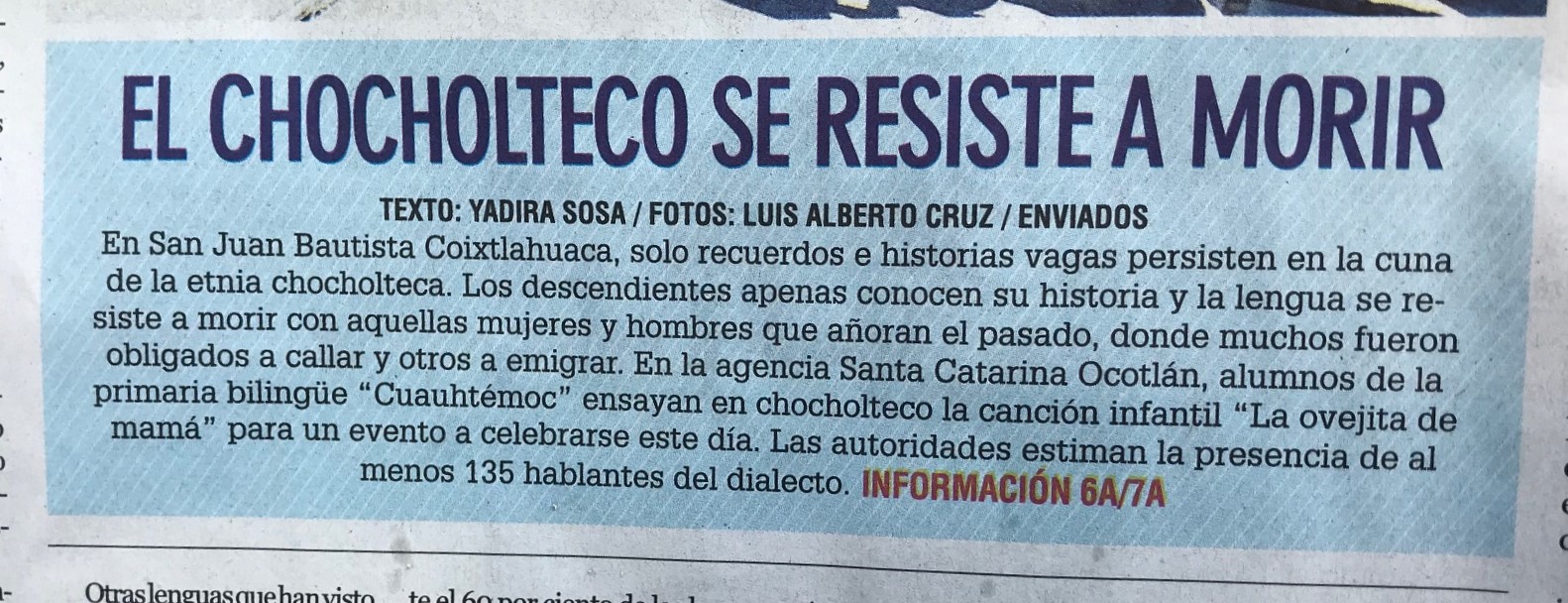
Para perder un lenguaje es para perder su cultura y gente. La extinción de una lengua resta del fundo grande de la sabiduría humana. Para permitir la atrofia y muerte de lenguas nativas es tan bárbaro como quemando los libros. Español e inglés están integrados como llaves a las fuerzas económicas poderosas. No hay nada nefaria en aprendiendo inglés por sí mismo. Pero, la presión económica y los recursos disponibles para aprenderlo son más grande que cualquier esfuerzas compensatorias para avanzar las lenguas indígenas. Esto me molesta porque me siento como un agente del globalismo podía acelerar la sofocación las lenguas nativas.


 Taking the long view—four millennia in the Museo Amparo. An afternoon in Puebla’s anthropological museum is a good place to thing amid its outstanding artifacts from Mesoamerican civilizations. I go often, and my four hours there (this time) passed through 4,000 years of human experience. The objects showed me other ways to view the cosmos, human fertility, divinities, writing, art, household utensils and political organizations. The variety of objects reflected amazing styles, some formal and realistic, others loose and abstract, still others as fresh as contemporary forms. Without writing, they used clay funereal figures with symbolic heads, noses, mouths and tongues to symbolize the virtues and accomplishments of the deceased—an obituary in ceramics. A video gallery of contemporary oral histories recounts cultural ideas and beliefs in Náhuatl, Mixe, Mixteca, Zapoteca, Chichimeca, and Maya—ancient languages still alive and necessary to meet human needs now as in the past.
 From museum galleries to artisans’ stalls in the mercado, you can see how creative energy flows from culture to culture, century to millennium. Sometimes the expression takes a new direction, at other times it doubles back on itself. Artifacts and products still throb with the human energy that pulses in our own veins and minds. You need only spend a day at the Amparo to see that primitive and advanced are meaningless ideas about cultures. Their abstract fallacy is the illusion there exists an objective standard by which to measure cultures. Human imagination seems always capable of rising to meet the needs and resources of a time and place. Comparing the artifacts and ruins of the past with the present doesn’t tell us we are more advanced as human beings. ‘Progress’ is a seductive but conceited notion; a false assumption that cultures rise upward through time toward some imaginary finish line. The ruins tell us another story.
 It makes me wonder if, in the rush of modern, urban life in the U.S., we take too little or no time to acknowledge the presence of those we don’t know. We all hunger for connection, for the affirmation of our being, but I fear we may have wrung it out of our culture with our utilitarian focus on work, and our isolation within the bubbles of shared opinions, social class, and race. Still, I believe there is a simple, human path out of our present divisions—to simply and sincerely acknowledge the presence of the ‘other,’ the person you don’t know, the person who thinks differently, or the foreigner you may otherwise fear. A simple acknowledgment of our shared existence as humans makes other connections possible and narrows the distances between us. It isn’t difficult.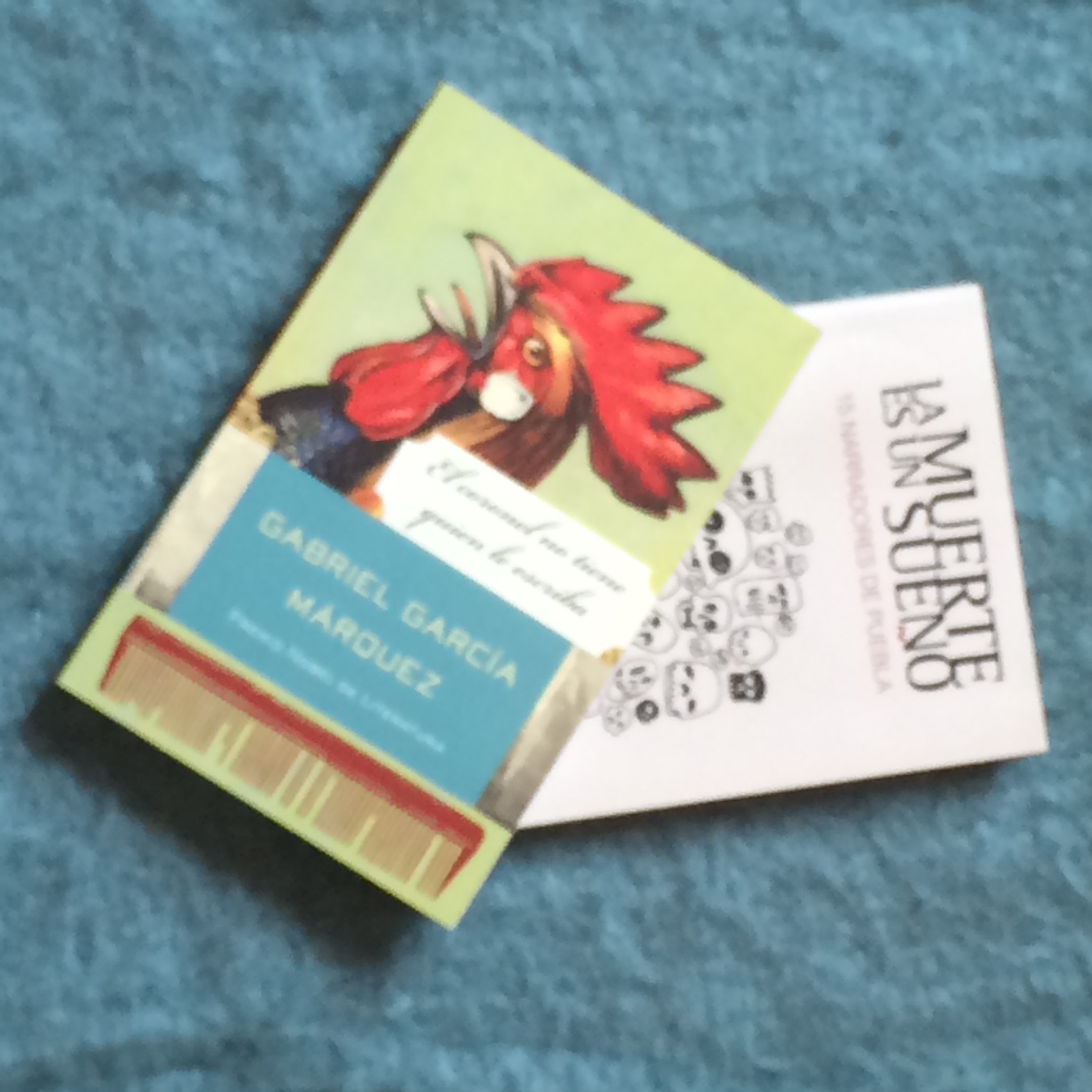


 communal effort. Sunset was nearly on us when we slipped through the cattle gate and hiked up the mountainside through the grass. The large tank sat on a concrete pad fed by tubes from springs tapped farther up the slope. A tube at the bottom of the cistern channeled water to a dozen smaller tubes that ran downhill to the houses in the hamlet below. Water is scarce in parts of Mexico, and even scarcer in the midst of a drought. The construction, operation, and maintenance of the simple cistern is a communal project, a shared vision. This small project, multiplied by millions of people, is what makes a great civilization. This is greatness working in an indigenous municipality. We can all learn from the past, if we will.


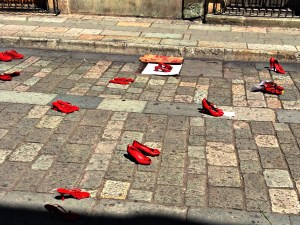
 Walking along the Alcala, Oaxaca’s street of high-end shops and tony restaurants, I’m surprised to see dozens of shoes, each the color of blood, set out in pairs on the gray cobbles. What is this, I wondered as I joined the cluster of Mexicans around the informational banner.
 Tourists passed the exhibition, most of them glanced at the crimson shoes, but few stopped to read the banner before they entered the shops and restaurants. Nevertheless, the silent, empty red shoes screamed to those of us who read the banner.
 The women’s emotions drove their stories of pain and loss. Now and then, each paused to wipe her eyes or regain her voice. Their words flashed like sharp knives, paring away the hypocrisy of police and public officials who told them not to worry, their daughters were probably off with their boyfriends. Or worse, officials told them the girl was probably a prostitute or drug addict—as if that justified their deaths. One by one, the mothers demanded an end to ‘la cultura machista’ that protects the men—including police—who treat women as less than human.
 Nor can women rely on the authorities to protect them from drug cartels that coerce women into transporting drugs and filling logistical roles. According to a former director of the National Women’s Institute (Mexico City), cartels force women into prostitution because the sex trade is the third most profitable market after drugs and small arms.
 It is often said that travel and a second language broaden one’s perspective. And this is true. Once we gain another language, and our cultural horizons widen, we are vulnerable to the moral questions once invisible to us. The violence against women, like the sexual abuse of children, becomes culturally pervasive when society turns a blind eye and says it’s a private matter. I can no longer say I didn’t know, and silence in the face of evil isn’t a moral option.













 Adventures in Midlife Spanish